Malnutrition in Chronic Kidney Disease | Protein-Energy Wasting
PACE Hospitals
Written by: Editorial Team
Medically reviewed by: Dr. A Kishore Kumar - Consultant Nephrologist and Renal Transplant Physician
Human kidneys do a variety of functions which help to keep our body in optimal condition. Following are the kidney function:
- Removal of excess fluid from the body
- Removal of waste products from blood
- Maintains electrolyte and acid base balance
- Maintains blood pressure
- Promotes bone health
- Produces glucose
- Reabsorbs amino acids filtered from the blood
- Produces hormone called erythropoietin to maintain hemoglobin levels
Chronic kidney disease or CKD is a condition in which there is a defect in the function or structure or both of kidneys lasting for more than 3 months. Chronic kidney disease is generally a permanent damage which is irreversible and may progress to further worsening of kidney function. There are 5 stages in chronic kidney disease from stage 1 to stage 5 based on the glomerular filtration rate (GFR). Higher stage is suggestive of more severe damage to the kidneys.
Metabolic changes in Chronic Kidney Disease
Kidneys help in keeping the bone health. This they do by keeping calcium, phosphorus, vitamin D and parathyroid hormone levels in normal range. Chronic kidney disease can lead to high phosphorus and parathyroid hormone levels, low calcium and vitamin D levels. These changes can lead to weakening of bones with more risk of fractures. The changes in calcium and phosphorus can lead to their deposition in blood vessels supplying the heart, causing heart attacks and heart failure. Failure of kidneys can lead to low hemoglobin. High potassium levels in blood and acid accumulation also occur, as they cannot be excreted properly in urine. Malnutrition with muscle wasting (protein energy wasting) can develop in patients with kidney failure.
Protein energy wasting (PEW) is common in patients with chronic kidney disease. It is characterized by simultaneous loss of body protein and energy stores. It can be seen even in patients with lower stages of CKD like stage 3. As the severity of kidney disease increases, malnutrition also increases. Studies done in India have shown that up to more than 90% of patients on dialysis have malnutrition in lower income group. More than 60% of middle-income group patients on dialysis have malnutrition.
Understanding Malnutrition in CKD
Malnutrition is one of the leading causes of poor clinical outcomes in patients with CKD. This condition is often underdiagnosed because many symptoms overlap with common kidney disease symptoms. In CKD, changes in appetite, nutrient metabolism, and the body’s ability to process proteins and fats lead to significant nutritional imbalances.
What Is Protein-Energy Wasting (PEW)?
Protein-energy wasting (PEW) refers to the loss of both muscle mass and fat, which occurs when the body does not have enough energy (calories) or protein to maintain normal function. In CKD, PEW is a result of various factors such as chronic inflammation, poor dietary intake, insulin resistance, and increased metabolic demand due to kidney dysfunction. This depletion of protein and fat contributes to severe fatigue, muscle weakness, poor immune response, and even a higher risk of cardiovascular disease.
Impact of PEW in CKD
In patients with CKD, PEW worsens disease progression. Studies have revealed that individuals with PEW have a significantly higher risk of cardiovascular events, death, and hospitalization. Malnutrition and muscular wasting in these patients can also result in problems such as fluid retention, hypotension, impaired kidney function, and increased susceptibility to infections.
Signs and Symptoms of Malnutrition in CKD
Some common signs of malnutrition or protein-energy wasting in CKD patients include:
- Fatigue and weakness due to muscle depletion
- Unexplained weight loss, despite normal or increased calorie intake
- Loss of appetite and reduced food intake
- Low serum albumin levels, which are indicative of poor nutritional status
- Changes in body composition, including muscle wasting and abdominal swelling due to fluid retention
Patients often do not experience these signs until they have progressed to later stages of CKD, making early screening essential.
Why is identifying protein energy wasting (PEW) important?
Protein energy wasting leads to-
- Poor quality of life
- Infections
- Heart disease
- Lesser life expectancy compared to those without malnutrition
What causes protein energy wasting in CKD patients?
There are many reasons for Protein energy wasting (PEW) as explained below:
- Anorexia: increase in levels of hormones which suppress appetite in seen in CKD patients. This leads to decreased calorie intake and malnutrition.
- Acidosis: Acid accumulation because of the inability of the kidneys to excrete in urine leads to protein breakdown in the muscles. This lead STO lean muscle mass
- Increased energy expenditure: CKD patients have increased resting energy expenditure due to various reasons which leads to more energy consumption
- Increased inflammation: there is increased inflammation in the body of these patients which leads to protein breakdown and reduced protein synthesis in the liver (e.g., albumin)
How to identify protein energy wasting (PEW)?
There are specific scales like Subjective Global Assessment (SGA) and Malnutrition Inflammation Score (MIS) which are used in clinics by nephrologists and dieticians.
PEW is to be suspected if any or all of the following are present:
- More than 5% weight loss over 3 months or 10% over 6 months
- Decreased BMI
- Reduced albumin levels in blood
- Unintentional less intake of calories and protein for at least 2 months
- Muscle wasting (e.g., reduced arm circumference)
- Loss of strength / stamina
Importance of nutritional management in chronic kidney disease patients
Nutritional therapy is important in patients with kidney disease because it helps in a variety of ways as follows:
- Nutritional therapy prevents the occurrence of protein energy wasting, and it helps in treatment of protein energy wasting if it has already occurred
- It helps in managing symptoms of kidney failure due to accumulation of waste products
- It helps in correcting electrolyte levels
- It helps in correcting acid base balance
- It promotes bone health
- It prevents the accumulation of salt and water in the body
- It helps in delaying the progression of kidney disease
General guidelines for nutrition therapy
1. Protein in the diet
In patients with reduced kidney function, a smaller number of nephrons (functional units of kidney) are working compared to a kidney with normal function. Higher protein intake and more of animal protein intake (e.g., meat) will lead to more pressure in the remaining glomeruli. Higher pressure occurs in these glomeruli because excess protein in the diet will cause more blood supply, and it leads to damage to these remaining glomeruli and further worsening of kidney disease
In patients of CKD who are not dialysis dependent, it is advised to take less protein in the diet of 0.6-0.8gm/kg/day. Less protein intake leads to less acid generation, decreased pressure in glomeruli, less production of waste products in the body and decreased protein loss in urine. Animal proteins are digested in the intestines by bacteria and leads to toxin productions which can do harm to the body. Preferring plant-based protein prevents this, and plant protein compared to animal protein is less acid producing and is less in sodium content. In patients who are on dialysis it is advised to take proteins up to 1 -1.2gm/kg/day as these patients have increased protein breakdown and protein loss during dialysis procedure.
2. Energy requirement
Patients with CKD should take at least 30-35Kcal/kg body weight / day, with 50 to 60% calories from carbohydrates. Fats should be restricted to less than 30% of calories and fats should contain less of saturated fat. Saturated fats should be less than 10% of total fat intake. Avoid foods with high fructose content like fruit juices with added sugars, soft drinks etc., High fructose content foods can cause insulin resistance, increased uric acid levels and heart disease.
3. Sodium
Sodium restriction in patients with CKD helps in lowering blood pressure, slowing the progression of kidney disease and improves the cardiovascular outcome of the patient. Excess sodium intake in patients on dialysis leads to excess weight gain, as sodium retains water in the body. Removal of this excess water during dialysis can lead to complications like drop in blood pressure and weakness. Recommended amount of salt to be taken per day in less than 5.5 grams (less than 2300 mg of sodium). Each gram of salt contains around 400 mg of sodium.
4. Dietary fiber
Constipation is common in patients with CKD because of the toxins which get accumulated in the body and altered bacterial composition in the gut. Fiber in the diet is broken down by good bacteria in the gut to produce products which strengthen the gut wall. In CKD patients’ good bacteria are decreased and bad bacteria are increased in the gut which breakdown protein in the diet to toxins which are absorbed and gut wall is damaged. It is advised to take at least 25grams of fiber in the diet to prevent constipation and maintain healthy gut flora.
Prevention of Malnutrition and PEW in CKD
Early Intervention: Preventing PEW in CKD begins with early screening. Regular nutritional monitoring is critical, especially for those who are at higher risk, such as dialysis patients or those suffering from hypertension, diabetes, or obesity.
Lifestyle Modifications: Maintaining a healthy weight through diet and regular physical activity helps reduce inflammation and improves overall kidney health. For patients with obesity, weight management is key to reducing kidney stress and improving metabolic health.
Medical Support: Multidisciplinary care from nephrologists, dietitians, and other healthcare professionals is essential to create an effective and personalized care plan for each CKD patient.
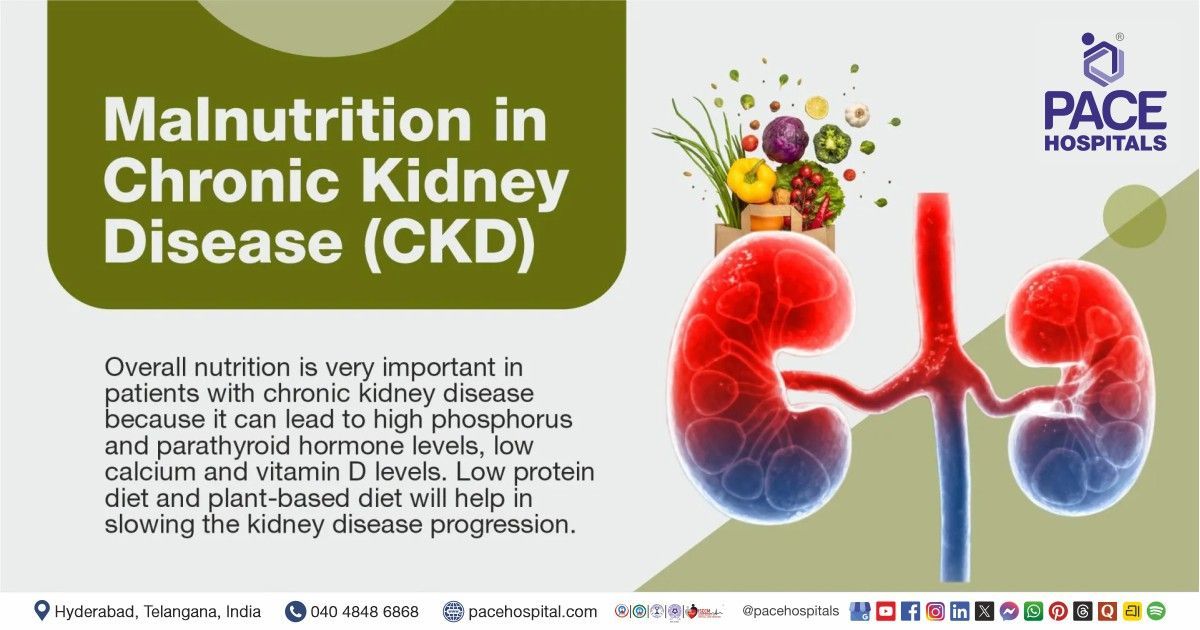
Overall nutrition is very important in patients with chronic kidney disease. Low protein diet and plant-based diet will help in slowing the kidney disease progression. Avoiding constipation and restricting sodium will help in preventing complications related to CKD.
FAQs on Malnutrition in Chronic Kidney Disease (CKD) & Protein-Energy Wasting
What is protein-energy wasting in chronic kidney disease?
Protein-energy wasting (PEW) refers to the loss of body protein and fat stores that occurs in patients with chronic kidney disease (CKD). This condition develops when calorie and protein intake are insufficient to meet metabolic demands. PEW is associated with muscle loss, fatigue, and poor overall health outcomes in CKD patients.
Why does malnutrition occur in chronic kidney disease?
Malnutrition in chronic kidney disease (CKD) is caused by a decreased appetite, metabolic problems, and inflammation. Patients may feel nausea, taste changes, and dietary limitations, limiting their food intake. These causes accumulate over time, contributing to muscle atrophy and energy depletion later on in life.
Can chronic kidney disease increase the risk of cardiovascular disease?
Yes. Malnutrition and protein-energy wasting in chronic kidney disease (CKD) are closely associated with increased risk of cardiovascular disease. Poor diet can aggravate inflammation, vascular damage, and metabolic imbalances, all of which are detrimental to heart health.
How does diabetes affect nutritional status in CKD?
Patients with diabetes who develop chronic kidney disease may experience altered metabolism and decreased appetite. Poor blood sugar control and regulation can exacerbate inflammation and nutritional imbalances, raising the risk of malnutrition.
Does obesity influence malnutrition in CKD?
Although obesity is commonly associated with excess body weight, individuals with CKD can still experience protein-energy wasting despite higher body mass. In such cases, muscle loss may occur even when body weight appears stable.
What symptoms may indicate malnutrition in CKD?
Fatigue, unintentional weight loss, muscle weakness, and a loss of appetite are all possible symptoms. Some persons experience digestive issues such as constipation, nausea, or stomach pain, which interfere with proper meal intake.
Can dialysis increase the risk of malnutrition?
Yes. Dialysis treatments may cause nutritional loss, such as amino acids and proteins. Dialysis patients require regular dietary monitoring to ensure enough energy and protein intake.
Can Constipation affect nutrition in CKD patients?
Yes. Constant constipation can reduce appetite and produce pain and discomfort, discouraging regular meals. Addressing gastrointestinal discomfort is critical to ensuring appropriate nutrition.
How is insulin resistance related to protein-energy wasting?
Insulin resistance is frequent in CKD, which can lead to protein breakdown and impaired muscle synthesis. When insulin signaling is disrupted, the body may lose its capacity to efficiently use nutrients for energy and tissue repair. This metabolic imbalance may worsen nutritional status.
Is hypertension associated with protein-energy wasting?
Hypertension is a common complication of chronic kidney disease (CKD) and may contribute indirectly to nutritional decline. High blood pressure can accelerate kidney damage, leading to metabolic changes that affect appetite and nutrient absorption.
Why is vitamin D important in CKD patients?
Low levels of vitamin D are frequently observed in CKD patients due to impaired kidney function. Vitamin D promotes bone health, immunological function, and muscle preservation. Deficiency may lead to weakness and a deterioration in nutritional condition.
How is protein-energy wasting diagnosed?
Protein-energy wasting diagnosis often involves assessing weight changes (BMI calculation), body composition, and laboratory markers such as albumin levels. Healthcare providers may also evaluate dietary intake and physical examination findings to determine nutritional status.
Why is early detection of malnutrition important in CKD?
Early detection of nutritional deterioration enables appropriate dietary adjustments and monitoring. Early intervention for malnutrition can enhance strength, immunity, and general quality of life in CKD patients.
How does inflammation contribute to protein-energy wasting?
Chronic inflammation in CKD may increase metabolic demands and accelerate muscle breakdown. Inflammatory processes also worsen insulin resistance, further disrupting normal protein metabolism.
Can malnutrition worsen kidney disease progression?
Poor dietary health might impair the body's ability to cope with disease and contribute to an earlier deterioration in kidney function. Malnutrition can also raise the risk of hospitalization and complications.
When should nutritional assessment be considered at PACE Hospitals for CKD patients?
Patients who are suffering fatigue, muscle loss, appetite changes, or other signs of chronic kidney disease (CKD) should seek examination. Early nutritional assessment aids in the detection of protein-energy waste and the development of therapeutic solutions.
What diagnostic services are available at PACE Hospitals for CKD-related malnutrition?
PACE Hospitals provides a comprehensive and thorough kidney evaluation that includes nutritional assessment, laboratory testing, and metabolic analysis. These services can help in the diagnosis of disorders such as insulin resistance, vitamin D deficiency, and electrolyte imbalance.
How does PACE Hospitals manage nutritional complications in CKD?
At PACE Hospitals the management typically involves coordinated care between experienced nephrologists, dietitians, and other specialists. Individualized dietary plans are developed to address metabolic conditions such as diabetes, obesity, and hypertension.
Are nutritional counseling services available at PACE Hospitals?
Yes. Nutritional counseling helps patients understand appropriate dietary choices, manage symptoms such as Constipation, and maintain balanced protein and calorie intake while living with CKD.
Why is multidisciplinary care important for CKD patients at PACE Hospitals?
Managing chronic kidney disease (CKD) requires coordination between nephrology, nutrition, and metabolic specialists. This approach helps reduce risks such as cardiovascular disease, improve nutritional health, and support overall patient well-being.
Share on
Request an appointment
Fill in the appointment form or call us instantly to book a confirmed appointment with our super specialist at 04048486868
Appointment request - health articles
Recent Articles