Stomach Cancer Awareness Month, November - 2025 | History & Importance
PACE Hospitals
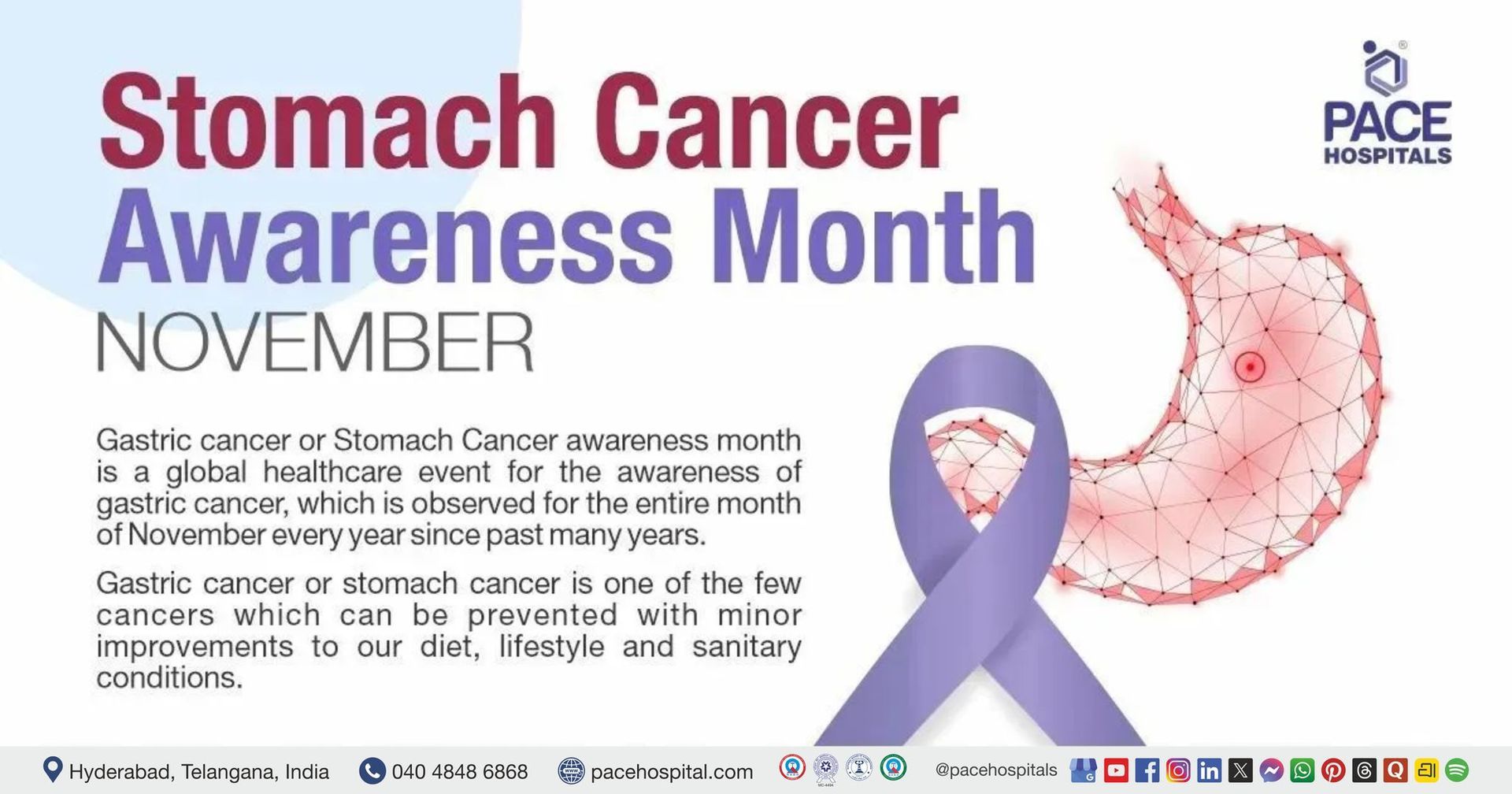
Gastric cancer or Stomach Cancer awareness month is a global healthcare event for the awareness of gastric cancer, which is observed for the entire month of November every year since past 12 years.
By targeting a straightforward but challenging mission of spreading the awareness of gastric cancer, various global and local organizations have joined hands together during this month to accomplish it.
Recognising the necessity of the early diagnosis of gastric cancer and its subsequent effect on the treatment plan are the prime factors in the promotion of awareness campaigns and activities. They also focus on the preventive tips to avoid the stomach cancer altogether by supporting the patient education initiatives and implying the importance of early detection by screening.
Necessity of Stomach Cancer Awareness
Despite the progressive declination of stomach cancer or gastric cancer incidence, it must be understood that it is still the second-biggest cause of cancer-related death, with the Asian populations demonstrating the highest risk of acquiring gastric cancer. General awareness about H. pylori induced gastric ulcers and cancers is poor.
Geographic variations in the incidence of stomach cancer have been attributed to a number of causes, environmental and hereditary factors. In addition, Helicobacter pylori infection has been linked to gastric cancer, and infection rates and varieties of infecting bacteria vary in Asia and other countries of the world. The statistics of stomach cancer include
- 5th most common cancer worldwide
- 4th most common cancer in men and
- 7th most common cancer in women
In 2020 more than 1 million new cases of stomach cancer were diagnosed
The necessity for the awareness of gastric cancer will be fulfilled by increasing the awareness of gastric cancer so that a significant reduction can be seen in the above-mentioned statistics.
Importance of Stomach Cancer Awareness Month
Gastric cancer or stomach cancer is one of the few cancers which can be prevented with minor improvements to our diet, lifestyle and sanitary conditions. Imagine the luxury of being at peace, non-cancerous and wealthy by not spending on the lifesaving drugs. All the aforementioned can be affordable with just a few lifestyle changes.
Arun Kumar Barad in 2014 conducted a clinicopathological study in the North Eastern terrain of India and analysed the need for gastric cancer awareness among general population for the prevention and early detection. Poor dietary habits bearing smoked mead, dried fish combined with the excessive use of tobacco caused the highest occurrence of gastric cancer in this part of the India.
Zao G published the effect of health education on the quality of life in gastric cancer patients who underwent surgery to treat it. It was demonstrated that an improvement in the overall health score of patients with stomach cancer following surgery remained significantly influenced by the health education and awareness of gastric cancer. It can also increase scores for physical, emotional, cognitive, and social functions, thus considerably enhancing the quality of life.
The above examples are a fraction among the various studies depicting the importance of a focussed awareness campaign to the general public.
History of Stomach Cancer Awareness Month (Lavender Blue Ribbon)
In 2010, No Stomach for Cancer (NSFC) championed and commemorated the first official Stomach Cancer Awareness Month by emphasising the necessity of reducing controllable risk factors of the stomach cancer. Since then, stomach cancer awareness month of November had been celebrated every year.
- 2011 - Stomach Cancer Awareness Month had been added to awareness calendars
- 2012 - 1st annual No Stomach for Cancer Walk, a global walk, was conducted to raise awareness.
The month of November is Stomach Cancer Awareness Month, and the goals of stomach cancer awareness primarily include:
- Raising public awareness and supporting educational efforts about stomach cancer, including risk factors, prevention, and early detection
- Recognizing the necessity for increased financing and research towards the early detection and treatment of stomach cancer.
- Empowerment by uniting the caring power of stomach cancer patients globally.
Preventive Tips of Stomach Cancer or Gastric Cancer
There are many environmental and behavioural factors that affecting the development of gastric cancer.
- Current and former smokers had a 44% increased risk for stomach cancer, according to research. Giving up tobacco can reduce the risk.
- Alcohol has been recognised as a disease progression risk factor, and the combination of alcohol and smoking increases the risk of non-cardia stomach cancer by five times. Alcohol abstinence can significantly reduce the risk of stomach cancer.
- In several studies, consuming large amounts of salt and processed meat has been proven to increase the risk of developing stomach cancer. It is illogical to consume foods high in salt and processed meat while facing imminent death.
- Patients who are obese have an elevated risk for cardia gastric cancer. Maintaining a healthy body mass index can aid in cancer prevention.
- Fresh vegetables and fruit have been demonstrated to reduce the risk of developing stomach cancer.
- Vitamin C or beta-carotene consumption can be linked to a reduction in the incidence of stomach cancer.
- Vegetables containing no starch, such as certain allium vegetables (especially garlic), as well as fruits (strong sources of antioxidants), can protect against stomach cancer.
- A 17% risk reduction for every 50 g of fruits per day was identified. Pulses, such as soy and soy products, and fruits containing selenium can help prevent stomach cancer.
Know more: Diagnosis and Treatment of Stomach Cancer
Share on
Request an appointment
Fill in the appointment form or call us instantly to book a confirmed appointment with our super specialist at 04048486868
Appointment request - health articles
Recent Articles