Inflammatory Bowel Disease (IBD) : Symptoms, Causes, Types, Risk Factors & Treatment
PACE Hospitals
Overview | Types | Causes | Symptoms | Risk Factors | Complications | Diagnosis | Treatment | Prevention
Lymphoma definition
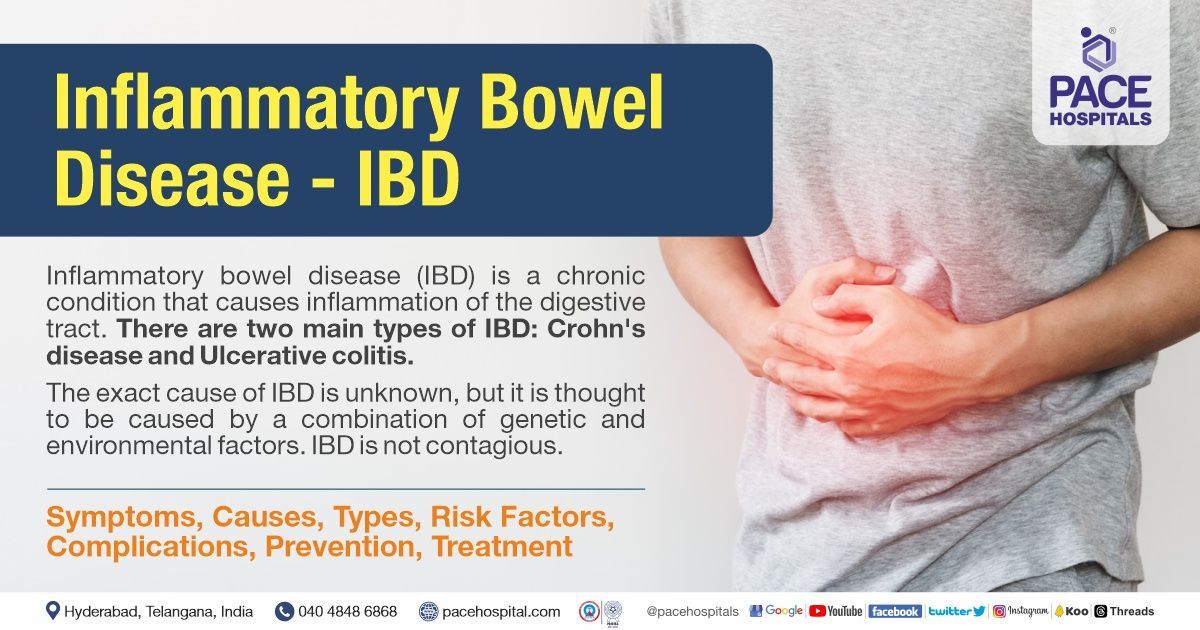
Inflammatory bowel disease (IBD) is the term for a group of disorders that cause prolonged inflammation of the digestive tract. The digestive tract is responsible for breaking down food, extracting the nutrients, and removing any unusable material and waste products. Inflammation anywhere along the digestive tract disrupts this normal process. This can be very painful. In some cases, IBD can even be life-threatening.

What are the Main Types of Inflammatory Bowel Disease (IBD)?
Many diseases are included in this umbrella term. The two most common are
Crohn’s disease can cause inflammation in any part of the digestive tract. However, it mostly affects the tail end of the small intestine. Ulcerative colitis is inflammation of the large intestine.
What Causes Inflammatory Bowel Disease (IBD)?
IBD is a collection of several diseases. Therefore, it does not have a single cause. However, some IBD has been linked to heredity. It can also be caused by problems with the immune system. If you have a sibling or parent with IBD, you are more likely to develop it yourself. Therefore, scientists think IBD may have a genetic component. The immune system also plays a role in IBD.
Normally, the immune system defends the body from infection. People with IBD experience digestive tract inflammation even when there is no infection. The immune system attacks the body’s own cells instead In people with IBD, such inflammation is prolonged. It may continue for months or years.
What are the Symptoms of Inflammatory Bowel Disease (IBD)?
Specific symptoms of IBD vary depending on the location and severity of any inflammation.
- Diarrhea occurs when affected portions of the bowel can’t reabsorb water.
- Bleeding ulcers may cause blood in the stool.
- Inflammation can thicken the wall of the intestine and block the passage of fecal material. This can cause pain, cramping, and bloating.
- Problems absorbing essential nutrients can lead to weight loss and anemia. They can also cause delayed growth or development in children.
People with Crohn’s disease may get sores in their mouths. Sometimes ulcers and fissures also appear around the genital area or anus.
What are the Risk Factors for Developing Inflammatory Bowel Disease (IBD)?
Smoking is one of the biggest risk factors for developing Crohn’s disease. Smoking also aggravates pain and other symptoms and increases the risk of complications .In most cases, IBD starts before the age of 30. However, it can show up at any age. People who have a parent, sibling, or child with IBD have a much higher risk of developing it themselves.
People in urban areas and industrialized countries have a higher risk of IBD as they consume more fat and processed food . Overall, IBD affects both genders equally. Ulcerative colitis is more common in men. Crohn’s disease is more common in women.
What are the Possible Complications from Inflammatory Bowel Disease (IBD)?
Possible complications of IBD include -
- Malnutrition
- Colon cancer
- Fistulas – a fistula is an ulcer that goes through the bowel wall, creating a hole between different parts of the digestive tract, intestinal rupture with life threatening abdominal infection and bowel obstruction.
How is Inflammatory Bowel Disease Diagnosed?
The first step in diagnosing IBD is a thorough medical history as well as family history as well as information about bowel habits followed by one or more diagnostic tests. These tests can be used to look for infections and other diseases.
- Blood tests can also sometimes be used to distinguish between Crohn’s disease and ulcerative colitis. However, blood tests alone cannot be used to diagnose IBD.
- Colonoscopy is the most important investigation. We use a camera on the end of a thin, flexible probe inserted through anus to look at the colon. It allows your doctor to look for ulcers, fistulas, and other damage. Small sample of bowel wall is taken. This is called a biopsy. Examining this biopsy under the microscope can be used diagnose IBD.
- Capsule endocopy, you swallow a small capsule containing a camera. As it moves through your intestine, it takes pictures. Once you have passed the camera in your stool, the pictures can be seen on a computer.
- CT scan of abdomen and barium enema are needed in some cases.
How is Inflammatory Bowel Disease Treated?
Most patients of IBD can be managed by medicines.
- Anti-inflammatory drug, steroids, antibiotics are the first step in IBD treatment. These drugs decrease inflammation of the digestive tract. If not responding specialised injections such as monoclonal antibodies may be used but are very expensive.
- Anti-diarrheal drugs and laxatives can be used to treat IBD symptoms. Lifestyle choices are important when you have IBD.
- Drinking plenty of fluids helps to compensate for those lost in stool.
- Avoiding dairy products and stressful situations also improves symptoms.
- Exercise can help improve your health, as can stopping smoking.
- Vitamin and mineral supplements can help with nutritional deficiencies. For example, iron supplements can treat anemia.
Surgery can sometimes be necessary for people with IBD. Some IBD surgeries include surgery to widen narrowed bowel & surgery to close or remove fistulas, removal of affected portions of the intestines, for people with Crohn’s disease removal of the entire colon and rectum, for severe cases of ulcerative colitis routine colonoscopy is used to monitor your increased risk for colon cancer.
Why Choose PACE Hospitals?
Expert Super Specialist Doctors
Advanced Diagnostics & Treatment
Affordable & Transparent Care
24x7 Emergency & ICU Support
How Can Inflammatory Bowel Disease Be Prevented?
The hereditary causes of IBD cannot be prevented. However, you may be able to reduce your risk of IBD, or prevent a relapse, by eating a healthy diet, exercising regularly, quitting smoking.
Share on
Request an appointment
Fill in the appointment form or call us instantly to book a confirmed appointment with our super specialist at 04048486868
Appointment request - health articles
Recent Articles